What is Tenjour painting?
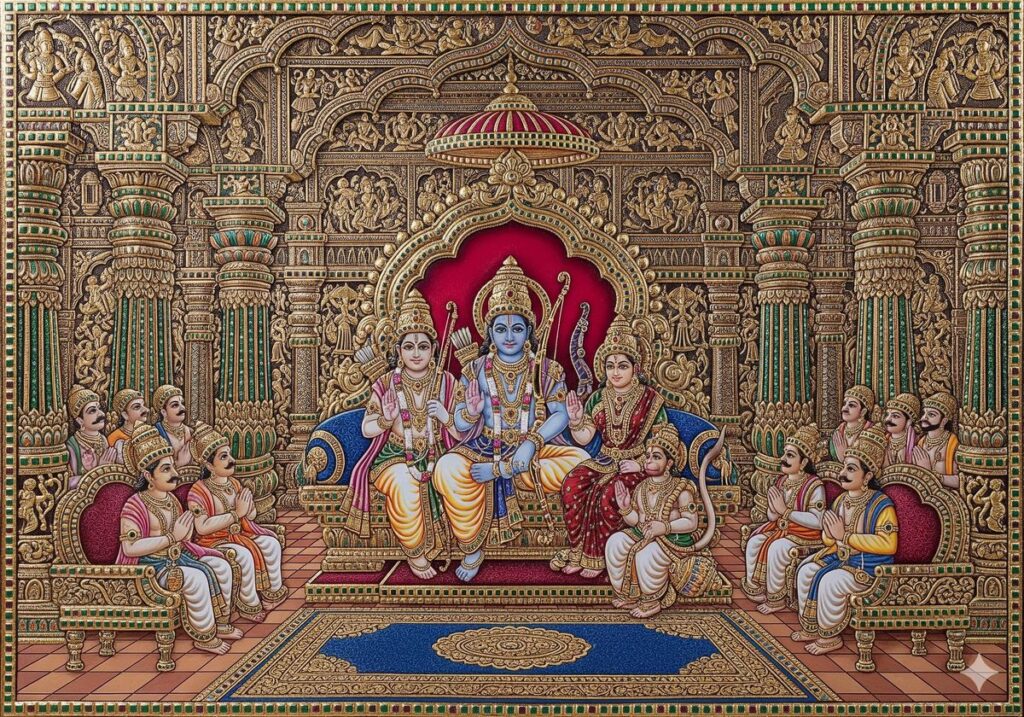
Tenjour painting is a very old and special art form of India that originated in the city of Thanjavur in Tamil Nadu. When we look at this painting, its royal and shiny appearance immediately attracts attention. The use of real gold and stones makes it completely different from other paintings.
What is the history of Tenjour painting?
The history of Tenjour art goes back to around the 16th century. It is believed that it began during the rule of the Chola kings. Later, during the Maratha rulers and the Vijayanagara Empire, this art received more encouragement. Kings and nobles commissioned such paintings for their temples and palaces because they were not only beautiful but also expressed devotion.
The most important identity of Tanjore painting is its raised or embossed work. These paintings are not flat. Parts like the crown, jewellery, and clothing of the deity appear slightly raised. Real gold foil is applied on these areas, which does not lose its shine even after many years. Along with this, stones are also used, making the painting look more lively.
How to make Tenjour painting ?
Making a Tenjour painting is a long and patient process. First, a cotton cloth is pasted on a wooden board. Then a mixture of chalk and glue is applied to make the surface smooth. Once the surface is ready, the artist carefully draws a sketch. After that, special paste is applied where raised designs are required. When it dries, thin sheets of real gold are applied. Finally, colours are filled, with red, blue, and green being the most commonly used.
Most Tanjore paintings The main subjects in Tanjore painting are gods and goddesses. like Bal Krishna, Goddess Lakshmi, Ganesha, and Saraswati are very popular. The deities are often shown under a temple-like arch, which reminds us of South Indian temples.
Tenjour painting in modern times?
Tanjore painting is not limited to temples only. People display it in their home prayer rooms, drawing rooms, and even in hotels and offices. Its price is high, but people still buy it with interest because it lasts for many years and creates a feeling of positivity in the home.
In the end, it can be said that Tanjore painting is a beautiful example of India’s royal heritage. This art brings together devotion and beauty and gives a unique sense of peace and calm to the viewer.
- Adaptation in Materials: While traditional,,,, ,pain,ting,s used jackfruit wood, modern, creators often, utilize plywood for, durability and to handle the, weight of, the, gold foil and stones,.
- Design and Usage: Though traditionally focused on, deities, these, paintings, are, now used as statement, pieces in homes to, add, elegance and luxury.
- Cultural Significance: They are, still considered, a,, symbol of, ,divinity and, ,abundance.
- Authentication: Modern, buyers, often, seek, certificates of, authenticity to, verify the use of, genuine 24-karat gold and, precious stones.
- Market Status: The, art form, is, recognized as a Geographical Indication (GI) in India.
Tenjoure painting artists
-
- Smt. Lakshmi Vijayabhaskar: A highly skilled artist known for maintaining the rich legacy of this classical gold-leaf art form.
-
- Dr. J Dundaraja: An experienced artist with over 31 years of practice who has trained over 700 students in the craft.
-
- Vibha: A third-generation artist and educator who works to preserve the traditional, authentic methods of Tanjore painting.
-
- Sanjay Tandekar: Known for creating traditional, highly detailed pieces, such as the Ram Darbar, using 24-carat gold foil.
Tanjore painting artists, historically from the Raju and Naidu communities of Andhra Pradesh, settled in Tamil Nadu under Nayaka and Maratha patronage.